BMA530
Bosch Sensortec BMA530 ultra-small triaxial low-g MEMS accelerometer — 16-bit, +/-2g to +/-16g, SPI/I2C/I3C, 125 uA typ, 1.2x0.8 mm WLCSP
Paste this into Claude Code (VS Code panel, Adom editor, or terminal) to install:
Search the Adom Wiki for the datasheet "BMA530" (slug: bma530) at https://wiki-ufypy5dpx93o.adom.cloud/wiki/datasheets/bma530. Download the standardized markdown and extracted diagram images into my project's datasheets/bma530/ directory. Show me the key specifications and pin configuration.
Source: Bosch Sensortec Datasheet (BST-BMA530-DS000-04) Manufacturer: Bosch Sensortec Part Number: BMA530 Document: BST-BMA530-DS000-04 --- Rev 1.1, Feb 6th 2025
Description
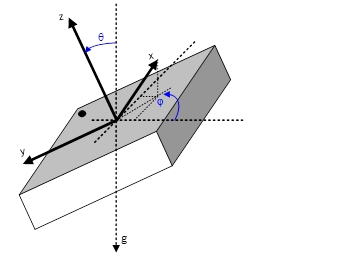
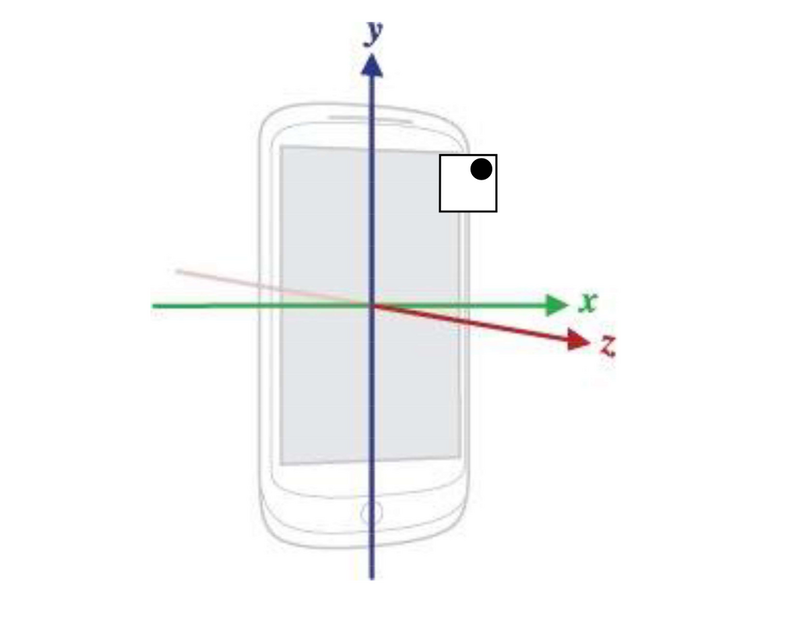
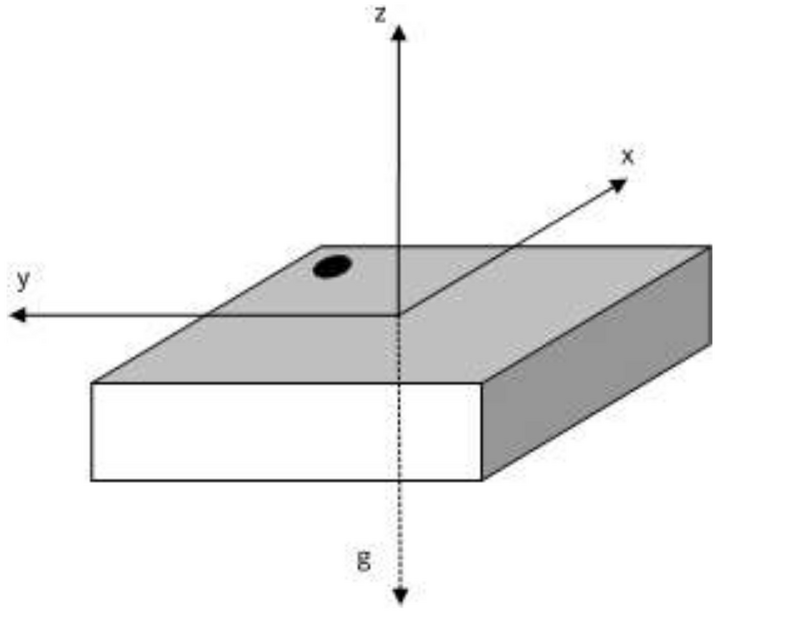
The BMA530 is an advanced, ultra-small, triaxial low-g accelerometer with digital interfaces, designed for low-power and demanding consumer electronics applications. The sensor integrates a 16-bit digital triaxial accelerometer with a configurable range of +/-2 g, +/-4 g, +/-8 g, or +/-16 g, along with an 8-bit digital temperature sensor covering an operating temperature range of -40 degC to +85 degC. Its built-in power management unit (PMU) enables advanced power management and ultra-low-power always-on operation, while an on-chip interrupt engine provides smart features such as motion detection, step counting, orientation and tilt detection, and configurable generic interrupts. The BMA530 is housed in a compact 1.2 x 0.8 mm WLCSP package with 6 pins.
Key Specifications
Features
- • Ultra-compact 1.2 x 0.8 mm Wafer Level Chip Scale Package (WLCSP), 6 pins, 0.55 mm height
- • 16-bit triaxial accelerometer with selectable +/-2 g, +/-4 g, +/-8 g, +/-16 g range
- • 8-bit digital temperature sensor (-40 degC to +85 degC operating range)
- • SPI (4-wire, 3-wire) up to 10 MHz, I3C up to 12.5 MHz, I2C up to 1 MHz (Fm+)
- • Output data rates from 1.5625 Hz to 6.4 kHz
- • Programmable low-pass filtering
- • Ultra-low current: 4.75 uA suspend, 18 uA low-power (100 Hz), 125 uA high-performance
- • Built-in power management unit (PMU) with advanced low-power modes
- • Power-on time of 1.8 ms to communication readiness
- • Up to 1 KB on-chip FIFO buffer for accelerometer, temperature, and sensor time stamps
- • Fast offset error compensation (FOC) for accelerometer
- • Sensor time stamps for accurate host-sensor time synchronization
- • Two independent programmable I/O pins for interrupt and synchronization
- • On-chip interrupt engine with smart always-on features:
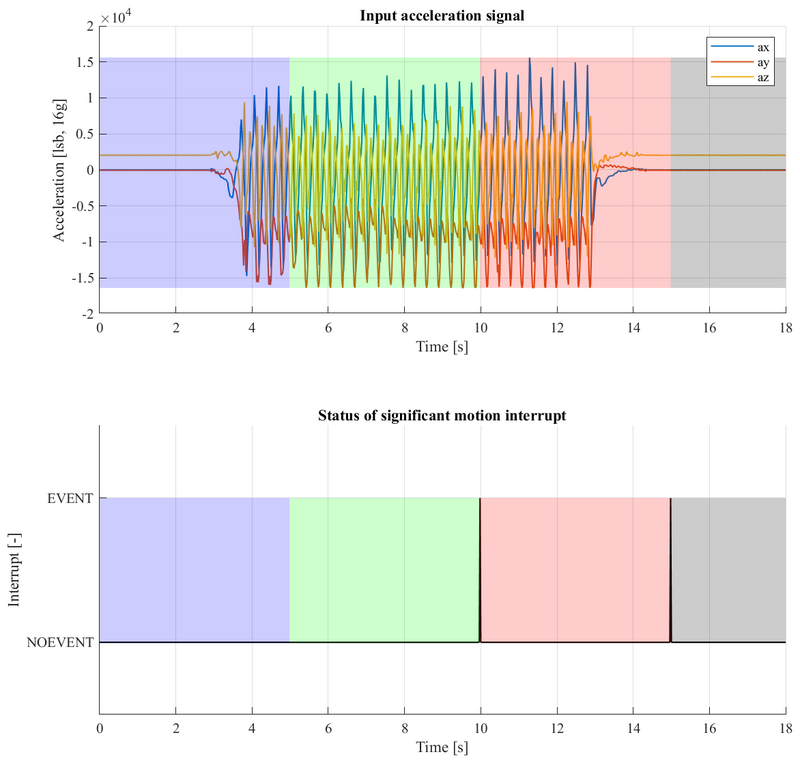
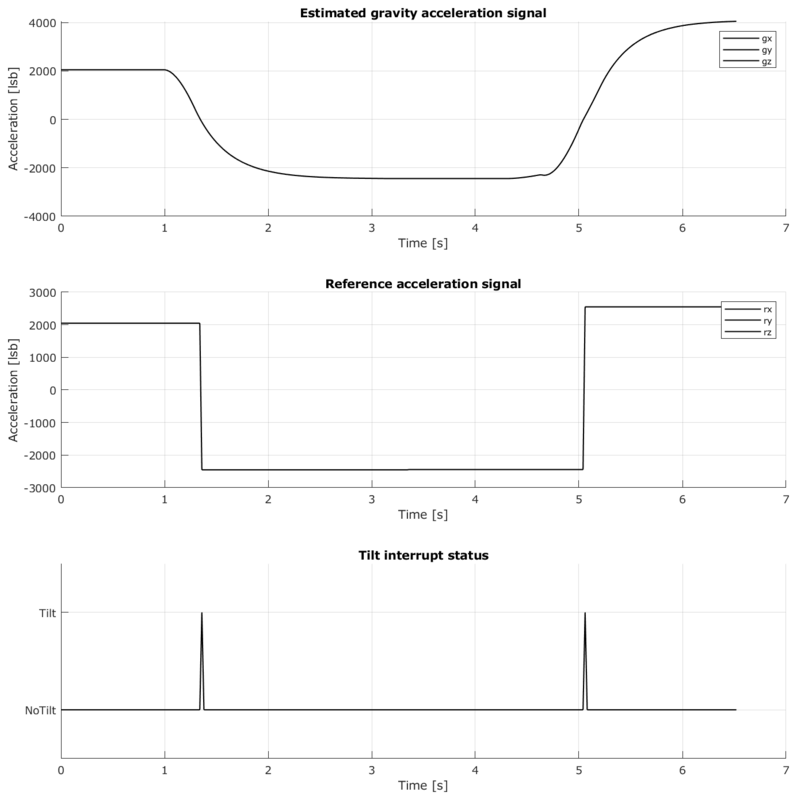
- Any-motion / no-motion detection - Step detector and plug-n-play step counter - Significant motion detection - Orientation detection (portrait/landscape) - Flat and tilt detection - Three parallel generic interrupt instances (highly configurable)
- • Accelerometer self-test capability
- • RoHS compliant, halogen-free and lead-free
Pin Configuration
> Note: Do not drive INT2 low during startup. If INT2 is not used in I2C/I3C mode, connect it to VDD.
Source: Bosch Sensortec Datasheet (BST-BMA530-DS000-04) Manufacturer: Bosch Sensortec Part Number: BMA530 Document: BST-BMA530-DS000-04 --- Rev 1.1, Feb 6th 2025
Absolute Maximum Ratings
| Parameter | Condition | Min | Max | Unit |
|---|---|---|---|---|
| Voltage at Supply Pin (VDD = VDDIO) | --- | -0.3 | 4 | V |
| Voltage at any Logic Pin | Non-supply pins | -0.3 | VDD + 0.3 (and < 4) | V |
| Passive Storage Temperature | Humidity <= 65% | -50 | 150 | degC |
| OTP Non-Volatile Memory Data Retention | T <= 85 degC | 10 | --- | years |
| Mechanical Shock | Duration <= 200 us | --- | 20000 | g |
| ESD (HBM) | At any pin | --- | 2000 | V |
| ESD (CDM) | --- | --- | 500 | V |
Electrical Characteristics
| Parameter | Symbol | Condition | Min | Typ | Max | Unit |
|---|---|---|---|---|---|---|
| Supply Voltage (core and I/O) | VDD = VDDIO | --- | 1.62 | 1.8 | 3.63 | V |
| Voltage Input Low (SPI, I2C, I3C) | VIL | --- | --- | --- | 0.3 x VDDIO | V |
| Voltage Input High (SPI, I2C, I3C) | VIH | --- | 0.7 x VDDIO | --- | --- | V |
| Voltage Output Low (SPI) | VOL | --- | --- | --- | 0.2 x VDDIO | V |
| Voltage Output High (SPI) | VOH | --- | 0.8 x VDDIO | --- | --- | V |
| Sensitivity Error | SA,err | Soldered, over life, +/-8 g | --- | --- | 1 | % |
| Sensitivity Temp Drift | TCS | Full temp range, best fit | --- | 0.005 | --- | %/K |
| Zero-g Offset | OA | Soldered | --- | +/-50 | --- | mg |
| Zero-g Offset (over life) | OA,life | Soldered, over life time | --- | +/-75 | --- | mg |
| Zero-g Offset Temp Drift | TCO | Full temp range, best fit | --- | +/-0.5 | --- | mg/K |
| Noise Density | nA,density | HPM, +/-8 g | --- | 120 | --- | ug/sqrt(Hz) |
| Nonlinearity Error | SA,NL | Best fit, +/-2 g | --- | 0.2 | --- | %FS |
| Cross Axis Sensitivity | SA,X | Between any two axes | --- | 0.3 | --- | % |
| ODR Accuracy | delta-fA | Any mode, 25 degC | --- | --- | 3.0 | % |
Power Consumption
| Mode | ODR / Condition | Typical Current | Unit |
|---|---|---|---|
| Suspend | --- | 4.75 | uA |
| Low Power Mode | 100 Hz | 18 | uA |
| High Performance Mode | Max ODR (6400 Hz) | 125 | uA |
The BMA530 integrates a power management unit (PMU) that enables transitions between Active and Suspend states. In Suspend mode, the accelerometer and all features are disabled, achieving the lowest current draw of 4.75 uA typical. The Active state includes both a Low Power Mode (LPM) with configurable averaging and a High Performance Mode (HPM) for maximum data fidelity. Current consumption in LPM depends on the selected ODR and number of averaged samples.
Communication Interface
The BMA530 supports three digital communication protocols, selected at startup:
- SPI (4-wire and 3-wire): Up to 10 MHz clock, supports Mode 0 (CPOL=0, CPHA=0) and Mode 3 (CPOL=1, CPHA=1). Single and multi-byte read/write with automatic address increment. 1 dummy byte required before read payload.
- I2C (Fm+): Up to 1 MHz clock, supports Standard, Fast, and Fast Mode Plus. Device address is 0x18 (SDO=GND) or 0x19 (SDO=VDDIO). 7-bit addressing. 0 dummy bytes on read.
- I3C (SDR): Up to 12.5 MHz clock, supports MIPI I3C v1.1.1 SDR mode. Static address 0x18 or 0x19, dynamic address assigned by controller. Supports In-Band Interrupt (IBI) with 1-byte mandatory data payload. 1 dummy byte required before read payload.
Protocol selection is determined by the first transaction after power-on or soft-reset. An initial read of address 0x00 establishes either SPI 4-wire or I2C mode. The device supports automatic address increment for efficient burst access across all protocols.
Packages
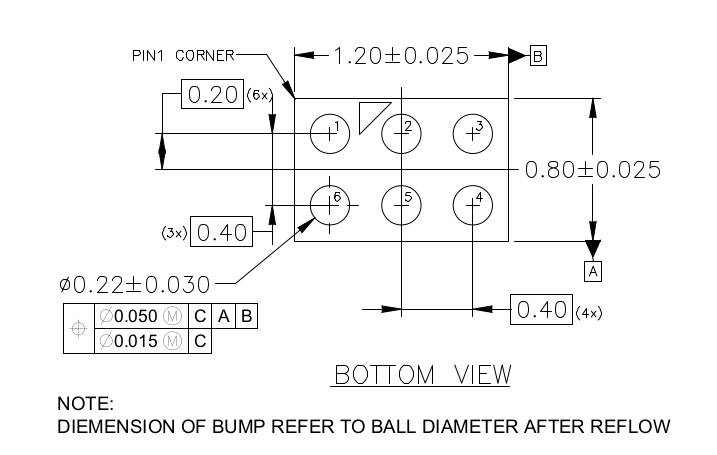
The BMA530 is available in a Wafer Level Chip Scale Package (WLCSP):
| Parameter | Value |
|---|---|
| Package Type | WLCSP |
| Dimensions (L x W x H) | 1.20 +/-0.025 x 0.80 +/-0.025 x 0.55 mm |
| Pin Count | 6 |
| Ball Diameter (after reflow) | 0.22 +/-0.030 mm |
| Ball Pitch | 0.40 mm |
| Pin 1 Marker | Top corner (see pinout diagram) |
| Compliance | RoHS, halogen-free, lead-free |
| Moisture Sensitivity Level | Per J-STD-020 |
A 100 nF decoupling capacitor is recommended on pin 6 (VDD). Refer to the datasheet for landing pattern recommendations and soldering guidelines.
Software API
Bosch Sensortec provides the BMA5 Sensor API as an open-source C driver for integration with host microcontrollers:
- Repository: https://github.com/boschsensortec/BMA530_SensorAPI
- Language: C (portable, no OS dependency)
- Features: Register-level abstraction, FIFO management, feature configuration (step counter, motion detection, orientation, tilt, generic interrupts, FOC), self-test routines, and power mode management.
The API requires the user to implement platform-specific I2C/SPI read, write, and delay functions.
Applications
- Smartphones and wearable devices (step counting, orientation, gesture recognition)
- IoT and smart home sensors (motion/no-motion wake-up triggers)
- Fitness trackers and health monitors (activity recognition)
- Tablets and e-readers (screen rotation)
- Gaming controllers and remote controls (tilt and motion input)
- Asset tracking and logistics (shock detection, orientation monitoring)
- Always-on low-power motion sensing (significant motion wake-up)
- Industrial condition monitoring (vibration sensing)
- Robotics and drones (inertial measurement)
- Consumer electronics power management (suspend-on-stationary)
Key Formulas
Acceleration Conversion
-----------------------
acceleration_g = raw_value / sensitivity
  where sensitivity (LSB/g):
    +/-2g  range: 16384
    +/-4g  range: 8192
    +/-8g  range: 4096
    +/-16g range: 2048

Temperature Conversion
----------------------
temperature_degC = 23 + (raw_temp_LSB / sensitivity)
  where sensitivity = 1 LSB/K
  Output at 23 degC = 0 LSB

Bandwidth (High Performance Mode)
---------------------------------
BW_3dB = ODR / 2   [Hz]
  (e.g., ODR = 100 Hz -> BW = 50 Hz)
  Exception at highest ODRs:
    ODR = 3200 Hz -> BW = 850 Hz
    ODR = 6400 Hz -> BW = 1675 Hz

Generic Interrupt Threshold
---------------------------
threshold_mg = register_value * (range_g * 1000) / 4096
  where range_g = full-scale range (2, 4, 8, or 16)

Step Counter Output
-------------------
step_count = STEP_COUNTER_OUT (20-bit register, 0 to 1048575)

Sensor Time
-----------
sensor_time_seconds = SENSOR_TIME_register / 25600
  (24-bit counter at 25.6 kHz resolution)
Diagrams & Graphs (6)
**Source:** [Bosch Sensortec Datasheet (BST-BMA530-DS000-04)](https://www.bosch-sensortec.com/media/boschsensortec/downloads/datasheets/bst-bma530-ds000.pdf)
**Manufacturer:** Bosch Sensortec
**Part Number:** BMA530
**Document:** BST-BMA530-DS000-04 --- Rev 1.1, Feb 6th 2025

## Description

The BMA530 is an advanced, ultra-small, triaxial low-g accelerometer with digital interfaces, designed for low-power and demanding consumer electronics applications. The sensor integrates a 16-bit digital triaxial accelerometer with a configurable range of +/-2 g, +/-4 g, +/-8 g, or +/-16 g, along with an 8-bit digital temperature sensor covering an operating temperature range of -40 degC to +85 degC. Its built-in power management unit (PMU) enables advanced power management and ultra-low-power always-on operation, while an on-chip interrupt engine provides smart features such as motion detection, step counting, orientation and tilt detection, and configurable generic interrupts. The BMA530 is housed in a compact 1.2 x 0.8 mm WLCSP package with 6 pins.

## Key Specifications

| Parameter | Value |
|---|---|
| Supply Voltage (VDD) | 1.62 V to 3.63 V |
| Current Consumption (Suspend) | 4.75 uA typ |
| Current Consumption (Low Power, 100 Hz) | 18 uA typ |
| Current Consumption (High Performance, max ODR) | 125 uA typ |
| Acceleration Range | +/-2 g, +/-4 g, +/-8 g, +/-16 g (selectable) |
| Resolution | 16 bit |
| Output Data Rate (High Performance) | 12.5 Hz to 6400 Hz |
| Output Data Rate (Low Power) | 1.5625 Hz to 400 Hz |
| Noise Density | 120 ug/sqrt(Hz) typ (HPM, +/-8 g) |
| Zero-g Offset | +/-50 mg typ (soldered) |
| Sensitivity (+/-2 g) | 16384 LSB/g |
| Sensitivity (+/-4 g) | 8192 LSB/g |
| Sensitivity (+/-8 g) | 4096 LSB/g |
| Sensitivity (+/-16 g) | 2048 LSB/g |
| Power-on Time | 1.8 ms typ |
| Start-up Time (to valid data) | 3.15 ms typ (HPM, 1600 Hz) |
| Operating Temperature | -40 degC to +85 degC |
| Package | WLCSP, 1.2 x 0.8 x 0.55 mm, 6 pins |
| Temperature Sensor Resolution | 8 bit |
| Temperature Sensor Range | -41 degC to +87 degC |
| FIFO Buffer | Up to 1 KB |
| Digital Interfaces | SPI (10 MHz), I3C (12.5 MHz), I2C (1 MHz Fm+) |

## Features

- Ultra-compact 1.2 x 0.8 mm Wafer Level Chip Scale Package (WLCSP), 6 pins, 0.55 mm height
- 16-bit triaxial accelerometer with selectable +/-2 g, +/-4 g, +/-8 g, +/-16 g range
- 8-bit digital temperature sensor (-40 degC to +85 degC operating range)
- SPI (4-wire, 3-wire) up to 10 MHz, I3C up to 12.5 MHz, I2C up to 1 MHz (Fm+)
- Output data rates from 1.5625 Hz to 6.4 kHz
- Programmable low-pass filtering
- Ultra-low current: 4.75 uA suspend, 18 uA low-power (100 Hz), 125 uA high-performance
- Built-in power management unit (PMU) with advanced low-power modes
- Power-on time of 1.8 ms to communication readiness
- Up to 1 KB on-chip FIFO buffer for accelerometer, temperature, and sensor time stamps
- Fast offset error compensation (FOC) for accelerometer
- Sensor time stamps for accurate host-sensor time synchronization
- Two independent programmable I/O pins for interrupt and synchronization
- On-chip interrupt engine with smart always-on features:
  - Any-motion / no-motion detection
  - Step detector and plug-n-play step counter
  - Significant motion detection
  - Orientation detection (portrait/landscape)
  - Flat and tilt detection
  - Three parallel generic interrupt instances (highly configurable)
- Accelerometer self-test capability
- RoHS compliant, halogen-free and lead-free

## Pin Configuration

| Pin # | Name | I/O Type | Description | SPI 4-Wire | SPI 3-Wire | I2C / I3C |
|---|---|---|---|---|---|---|
| 1 | VSS | Ground | Ground (VSS = GND = GNDIO) | GND | GND | GND |
| 2 | INT1 | Digital I/O | Interrupt pin 1 (or Serial Data) | SDO/MISO | INT1 | INT1 |
| 3 | INT2 | Digital I/O | Interrupt pin 2 (or Chip Select for SPI) | CSB | CSB | INT2 (or VDD if unused) |
| 4 | SDA | Digital I/O | Serial Data | SDI/MOSI | SDX | SDA |
| 5 | SCL | Digital I/O | Serial Clock | SCK | SCK | SCL |
| 6 | VDD | Supply | Power supply analog & digital domain, 1.62 V to 3.63 V | VDD (= VDDIO) | VDD (= VDDIO) | VDD (= VDDIO) |

> **Note:** Do not drive INT2 low during startup. If INT2 is not used in I2C/I3C mode, connect it to VDD.

## Absolute Maximum Ratings

| Parameter | Condition | Min | Max | Unit |
|---|---|---|---|---|
| Voltage at Supply Pin (VDD = VDDIO) | --- | -0.3 | 4 | V |
| Voltage at any Logic Pin | Non-supply pins | -0.3 | VDD + 0.3 (and < 4) | V |
| Passive Storage Temperature | Humidity <= 65% | -50 | 150 | degC |
| OTP Non-Volatile Memory Data Retention | T <= 85 degC | 10 | --- | years |
| Mechanical Shock | Duration <= 200 us | --- | 20000 | g |
| ESD (HBM) | At any pin | --- | 2000 | V |
| ESD (CDM) | --- | --- | 500 | V |

## Electrical Characteristics

| Parameter | Symbol | Condition | Min | Typ | Max | Unit |
|---|---|---|---|---|---|---|
| Supply Voltage (core and I/O) | VDD = VDDIO | --- | 1.62 | 1.8 | 3.63 | V |
| Voltage Input Low (SPI, I2C, I3C) | VIL | --- | --- | --- | 0.3 x VDDIO | V |
| Voltage Input High (SPI, I2C, I3C) | VIH | --- | 0.7 x VDDIO | --- | --- | V |
| Voltage Output Low (SPI) | VOL | --- | --- | --- | 0.2 x VDDIO | V |
| Voltage Output High (SPI) | VOH | --- | 0.8 x VDDIO | --- | --- | V |
| Sensitivity Error | SA,err | Soldered, over life, +/-8 g | --- | --- | 1 | % |
| Sensitivity Temp Drift | TCS | Full temp range, best fit | --- | 0.005 | --- | %/K |
| Zero-g Offset | OA | Soldered | --- | +/-50 | --- | mg |
| Zero-g Offset (over life) | OA,life | Soldered, over life time | --- | +/-75 | --- | mg |
| Zero-g Offset Temp Drift | TCO | Full temp range, best fit | --- | +/-0.5 | --- | mg/K |
| Noise Density | nA,density | HPM, +/-8 g | --- | 120 | --- | ug/sqrt(Hz) |
| Nonlinearity Error | SA,NL | Best fit, +/-2 g | --- | 0.2 | --- | %FS |
| Cross Axis Sensitivity | SA,X | Between any two axes | --- | 0.3 | --- | % |
| ODR Accuracy | delta-fA | Any mode, 25 degC | --- | --- | 3.0 | % |

## Power Consumption

| Mode | ODR / Condition | Typical Current | Unit |
|---|---|---|---|
| Suspend | --- | 4.75 | uA |
| Low Power Mode | 100 Hz | 18 | uA |
| High Performance Mode | Max ODR (6400 Hz) | 125 | uA |

The BMA530 integrates a power management unit (PMU) that enables transitions between Active and Suspend states. In Suspend mode, the accelerometer and all features are disabled, achieving the lowest current draw of 4.75 uA typical. The Active state includes both a Low Power Mode (LPM) with configurable averaging and a High Performance Mode (HPM) for maximum data fidelity. Current consumption in LPM depends on the selected ODR and number of averaged samples.

## Communication Interface

The BMA530 supports three digital communication protocols, selected at startup:

- **SPI (4-wire and 3-wire):** Up to 10 MHz clock, supports Mode 0 (CPOL=0, CPHA=0) and Mode 3 (CPOL=1, CPHA=1). Single and multi-byte read/write with automatic address increment. 1 dummy byte required before read payload.
- **I2C (Fm+):** Up to 1 MHz clock, supports Standard, Fast, and Fast Mode Plus. Device address is 0x18 (SDO=GND) or 0x19 (SDO=VDDIO). 7-bit addressing. 0 dummy bytes on read.
- **I3C (SDR):** Up to 12.5 MHz clock, supports MIPI I3C v1.1.1 SDR mode. Static address 0x18 or 0x19, dynamic address assigned by controller. Supports In-Band Interrupt (IBI) with 1-byte mandatory data payload. 1 dummy byte required before read payload.

Protocol selection is determined by the first transaction after power-on or soft-reset. An initial read of address 0x00 establishes either SPI 4-wire or I2C mode. The device supports automatic address increment for efficient burst access across all protocols.

## Packages

The BMA530 is available in a Wafer Level Chip Scale Package (WLCSP):

| Parameter | Value |
|---|---|
| Package Type | WLCSP |
| Dimensions (L x W x H) | 1.20 +/-0.025 x 0.80 +/-0.025 x 0.55 mm |
| Pin Count | 6 |
| Ball Diameter (after reflow) | 0.22 +/-0.030 mm |
| Ball Pitch | 0.40 mm |
| Pin 1 Marker | Top corner (see pinout diagram) |
| Compliance | RoHS, halogen-free, lead-free |
| Moisture Sensitivity Level | Per J-STD-020 |

A 100 nF decoupling capacitor is recommended on pin 6 (VDD). Refer to the datasheet for landing pattern recommendations and soldering guidelines.

## Software API

Bosch Sensortec provides the **BMA5 Sensor API** as an open-source C driver for integration with host microcontrollers:

- **Repository:** [https://github.com/boschsensortec/BMA530_SensorAPI](https://github.com/boschsensortec/BMA530_SensorAPI)
- **Language:** C (portable, no OS dependency)
- **Features:** Register-level abstraction, FIFO management, feature configuration (step counter, motion detection, orientation, tilt, generic interrupts, FOC), self-test routines, and power mode management.

The API requires the user to implement platform-specific I2C/SPI read, write, and delay functions.

## Applications

- Smartphones and wearable devices (step counting, orientation, gesture recognition)
- IoT and smart home sensors (motion/no-motion wake-up triggers)
- Fitness trackers and health monitors (activity recognition)
- Tablets and e-readers (screen rotation)
- Gaming controllers and remote controls (tilt and motion input)
- Asset tracking and logistics (shock detection, orientation monitoring)
- Always-on low-power motion sensing (significant motion wake-up)
- Industrial condition monitoring (vibration sensing)
- Robotics and drones (inertial measurement)
- Consumer electronics power management (suspend-on-stationary)

## Key Formulas

```
Acceleration Conversion
-----------------------
acceleration_g = raw_value / sensitivity
  where sensitivity (LSB/g):
    +/-2g  range: 16384
    +/-4g  range: 8192
    +/-8g  range: 4096
    +/-16g range: 2048

Temperature Conversion
----------------------
temperature_degC = 23 + (raw_temp_LSB / sensitivity)
  where sensitivity = 1 LSB/K
  Output at 23 degC = 0 LSB

Bandwidth (High Performance Mode)
---------------------------------
BW_3dB = ODR / 2   [Hz]
  (e.g., ODR = 100 Hz -> BW = 50 Hz)
  Exception at highest ODRs:
    ODR = 3200 Hz -> BW = 850 Hz
    ODR = 6400 Hz -> BW = 1675 Hz

Generic Interrupt Threshold
---------------------------
threshold_mg = register_value * (range_g * 1000) / 4096
  where range_g = full-scale range (2, 4, 8, or 16)

Step Counter Output
-------------------
step_count = STEP_COUNTER_OUT (20-bit register, 0 to 1048575)

Sensor Time
-----------
sensor_time_seconds = SENSOR_TIME_register / 25600
  (24-bit counter at 25.6 kHz resolution)
```
Sub-Skills
What are Sub-Skills?
Sub-skills are community-contributed AI skill extensions for this component.
They teach AI assistants about specific tools, configurators, or workflows.
Examples:
- A manufacturer’s configuration tool for a motor controller
- A community-written design guide for an amplifier circuit
- An automated test/validation script for a sensor module
How to add one: Click Add Sub-Skill, provide the URL
to your skill and a brief description. Submissions are reviewed by the Adom team
before going live.
Sub-skills are community-contributed AI skill extensions for this component. They teach AI assistants about specific tools, configurators, or workflows.
Examples:
- A manufacturer’s configuration tool for a motor controller
- A community-written design guide for an amplifier circuit
- An automated test/validation script for a sensor module
How to add one: Click Add Sub-Skill, provide the URL to your skill and a brief description. Submissions are reviewed by the Adom team before going live.
No sub-skills yet. Be the first to contribute one!